
Once you buy iraqi dinar notes, how you store them matters just as much as where you bought them. Paper currency can pick up damage from light, moisture and poor handling over time. Some common storage habits actually make this worse rather than better.
Below, storage methods are ranked from least safe to most safe, so you can see exactly where your current method stands and what to upgrade to next.
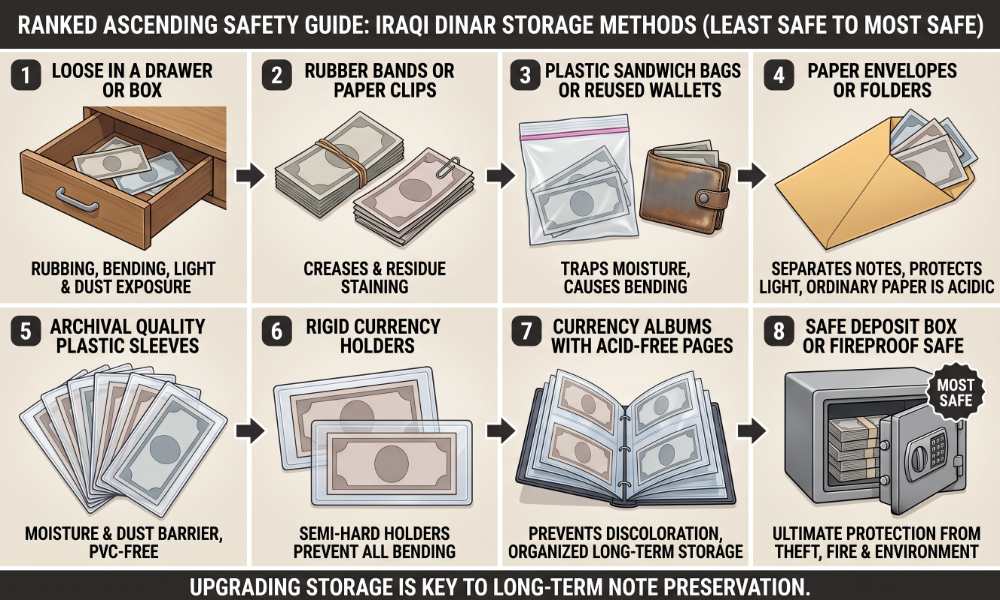
Loose in a Drawer or Box
- Notes rub against each other, which causes bending and surface wear
- No barrier against dust or moisture in the air
- Every time the drawer opens, notes are exposed to light
- Offers the least protection of any method on this list
Rubber Bands or Paper Clips
- Rubber bands degrade over time and can leave sticky residue on the note
- Both rubber bands and metal clips create pressure points
- Pressure points lead to creases and permanent indentations
- Removing bands or clips is one of the easiest fixes if you are doing this now
Plastic Sandwich Bags or Reused Wallets
- Adds a basic barrier against dirt, better than loose storage
- Standard plastic bags are not made for long term currency storage
- Bags can trap moisture inside instead of keeping it out
- A wallet exposes notes to constant bending and daily friction
- Fine for short term use, not suited for a real collection
Paper Envelopes or Folders
- Keeps notes separated so they do not rub against each other
- Offers some protection from light and dust
- Regular paper is not acid free
- Acidic paper can cause yellowing or brittleness in the note over long periods
Archival Quality Plastic Sleeves
- Designed specifically for currency, a real step up in protection
- Look for sleeves labeled archival quality and PVC free
- PVC based plastics can release chemicals that damage paper over time
- Protects against moisture, dust and handling
- Lets you view the note without removing it from protection
Rigid Currency Holders
- Semi hard holders prevent the note from bending entirely while stored
- Commonly used for higher value or rarer Iraqi Dinar notes
- Protects against accidental bending that soft sleeves cannot fully stop
Currency Albums With Acid Free Pages
- One of the best options for a growing collection, not just a single note
- Keeps notes organized and protected from light when closed
- Acid free pages prevent long term discoloration
- A common choice for collectors planning to keep and display their notes for years
Safe Deposit Box or Fireproof Safe With Climate Control
- The highest level of protection available
- Guards against fire, theft and environmental damage
- Best combined with acid free sleeves or albums stored inside
- Recommended for larger or more valuable collections
Handling Matters Too
Proper storage only works if notes are handled carefully before being placed into protection. Human skin naturally produces oils, sweat and mild acids that transfer to paper fibers and can cause staining or discoloration over time.
- Hold by the edges: avoid touching the face, watermarks, or central artwork of a note, and hold banknotes by their outer edges instead
- Clean, dry hands: wash and dry your hands before handling uncirculated currency, or use powder free nitrile or cotton numismatic gloves
- Flat surfaces: only unpack or examine banknotes on a clean, smooth surface away from food, liquids, and drafts
Conditions That Affect Every Storage Method
- Sunlight: Ultraviolet light breaks down paper fibers and causes ink fading, keep notes away from direct window light.
- Humidity: Relative humidity above roughly 60 percent encourages mold and mildew that can permanently stain paper, aim for a stable range of 30 to 50 percent.
- Temperature changes: Fluctuating temperature causes paper to expand and contract repeatedly, which adds stress over time, a stable room temperature around 18 to 21°C (65 to 70°F) is ideal.
Frequently Asked Questions
What is the safest way to store Iraqi Dinar notes?
A currency album with acid free pages or individual archival sleeves, kept inside a fireproof safe or safe deposit box, offers the highest level of protection against physical damage, environmental conditions and theft.
Can rubber bands damage Iraqi Dinar banknotes?
Yes. Rubber bands can degrade over time and leave a sticky residue on the note and they also create pressure points that lead to creases.
Is it safe to store banknotes in regular plastic bags?
Regular plastic bags are not designed for long term currency storage and can trap moisture. Archival quality, PVC free sleeves made specifically for currency are a safer option.
Does sunlight damage paper currency?
Yes. Direct sunlight can cause fading and gradual paper degradation, so notes should be kept away from direct light exposure whenever possible.
Where can I buy Iraqi Dinar notes to start or grow my collection?
You can browse verified iraqi dinar for sale to compare options before you buy iraqi dinar online for your collection.
Final Thoughts
Storage matters as much as the note itself. Moving up from loose drawers, rubber bands or plastic bags toward archival sleeves, acid free albums and secure, climate stable storage makes a real difference in how well your iraqi dinar note collection holds up over time. If you are just getting started, choosing the right storage method from the beginning is easier than fixing damage later. When you are ready to buy iqd for sale or add to an existing collection, you can browse verified Iraqi Dinar notes for sale and store each new note properly from the start.