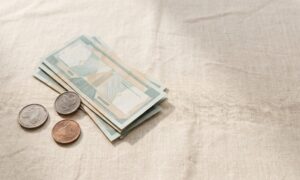
The Iraqi fils is one thousandth of an Iraqi dinar. Few people use the word today, yet it shaped Iraqi money for almost sixty years. You will still see it on older coins and in history books.
This guide explains what a fils is, how it worked and why it faded away.
Quick Answer
A fils is a subunit of the Iraqi dinar. One dinar equals 1,000 fils. Iraq issued fils coins from 1931, and production largely stopped after 1990. Inflation made the unit obsolete, so modern Iraqi notes and coins show whole dinars only.
How Many Fils Are in a Dinar?
There are 1,000 fils in one dinar. The Arabic spelling is فلس.
This makes the maths simple. A quarter dinar equals 250 fils. A half dinar equals 500 fils. Early Iraqi banknotes included quarter and half dinar values, so these amounts appeared on paper money too.
The First Iraqi Fils Coins
Iraq introduced its first national coins in 1931 and 1932. The set used fils from the start.
- 1 and 2 fils: bronze
- 4 and 10 fils: nickel
- 20, 50 and 200 fils: silver
The 200 fils coin was also known as a rial. Early coins showed King Faisal I from 1931 to 1933. King Ghazi appeared from 1938 and King Faisal II from 1943.
Fils Coins After 1958
The monarchy ended in 1958, and the new republic issued fresh coins. The series ran in 1, 5, 10, 25, 50 and 100 fils. The 25, 50 and 100 fils coins used silver until 1969.
The designs changed too. An allegorical sun replaced the king. Three palm trees replaced the sun in 1968.
Larger Coins of the 1970s and 1980s
Iraq added bigger coins over time. A 250 fils coin arrived in 1970. A 500 fils coin and a 1 dinar coin followed in the early 1980s.
From 1980, shape helped people tell these coins apart. The 250 fils coin had eight sides. The 500 fils coin was square. The 1 dinar coin had ten sides.
Iraq also issued a commemorative series in 1982. It celebrated Babylonian achievements, and it included a 50 fils coin.
Why the Fils Disappeared
Coin production largely stopped after 1990. The Gulf War and sanctions caused this. Prices rose quickly, and the smaller units lost their purpose. Inflation has made the fils obsolete since 1990.
Iraq returned to coins in 2004. This time it issued 25, 50 and 100 dinar coins, which use dinars and not fils. You can read how they compare with paper money in our guide to Iraqi dinar banknotes vs coins.
Fils in Other Countries
Iraq is not the only country with this unit. Kuwait and Bahrain also divide their dinar into 1,000 fils. The name is shared across several Arab currencies, even though Iraq no longer uses it.
Can You Still Find Fils Today?
Yes, but only on older coins. Collectors look for them in the same way they look for other historic Iraqi pieces.
Most beginners start with paper money instead. Notes show a wide range of designs and are easy to store. If you want to see what is available, browse our iraqi dinar for sale collection.
FAQs
What is a fils?
A fils is one thousandth of an Iraqi dinar. It was the subunit of Iraqi money for most of the twentieth century.
How many fils are in one Iraqi dinar?
One dinar equals 1,000 fils.
Does Iraq still use fils?
No. Inflation has made the fils obsolete since 1990. Current coins and notes show whole dinars.
When did Iraq stop making fils coins?
Production largely stopped after 1990 because of the Gulf War and sanctions.
What was the first Iraqi fils coin?
Iraq issued its first national coins in 1931 and 1932. The set included 1, 2, 4, 10, 20, 50 and 200 fils.
Which other countries use fils?
Kuwait and Bahrain also divide their dinar into 1,000 fils.
Where can I find official information?
The Central Bank of Iraq issues the country’s notes and coins. Visit the Central Bank of Iraq website for official details.
Final Thoughts
The Iraqi fils tells a short story about a long period of change. It began with the first national coins in 1931 and faded after 1990. Today it survives on older coins and in collector guides.
When you are ready to start your own collection, you can buy iraqi dinar online from our shop. Collectors who prefer a wider range can also check our iqd for sale listings.